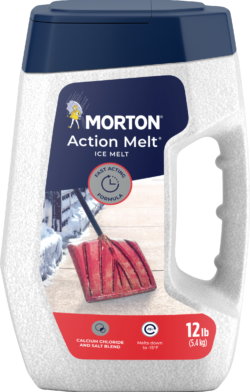
Morton® Action Melt® Fast Action Ice Melt
Product Overview:
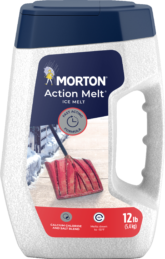
Time – and the elements – aren’t always on your side. To melt ice fast in sub-zero temperatures, use Morton® Action Melt®. Combining sodium chloride and calcium chloride, Morton® Action Melt® produces an extra “spark” to melt quickly on contact with ice and snow. Use it when you need to clear the way, fast.
Available Sizes:
- 12 lb. jug
- 25 lb. bag
- 40 lb. bag
- 50 lb. pail
Morton® Action Melt® is the faster way to clear the way.
A blend of calcium chloride and traditional melting salt, Morton® Action Melt® delivers superior melting performance even in extreme temperatures:
• Penetrates fast to break through ice and snow’s bond with pavement.
• Melts faster and longer than traditional melting salt at a lower cost than most pure calcium chloride melters.
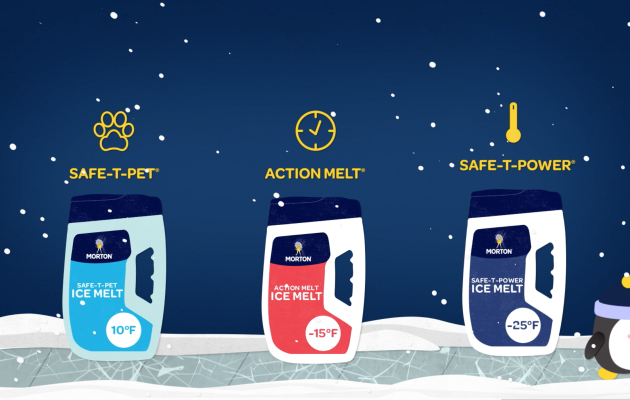
• Scientifically proven to melt in extreme winter temperatures as low as -15°F.
The ingredients in Morton® Action Melt®:
• Calcium Chloride (CaCl2)
• Sodium Chloride (NaCl)
A blend of calcium chloride and traditional melting salt, Morton® Action Melt® delivers superior melting performance even in extreme temperatures:
• Penetrates fast to break through ice and snow’s bond with pavement.
• Melts faster and longer than traditional melting salt at a lower cost than most pure calcium chloride melters.
• Scientifically proven to melt in extreme winter temperatures as low as -15°F.
The ingredients in Morton® Action Melt®:
• Calcium Chloride (CaCl2)
• Sodium Chloride (NaCl)
All deicers (whether salt or specialty melter) attract moisture to form a liquid brine. This brine has a lower melting point than the ice and snow around it and so begins to melt its’ colder surroundings.
Traditional melting salt, or rock salt, has an effective melting temperature of around 5°F. Many ice melters will blend rock salt with other chemicals with even lower melting temperatures to work in more extreme conditions. Morton® Action Melt® combines traditional melting salt with calcium chloride (the lowest temperature melter) to work in temperatures as low as -15°F.
• Apply Early
Apply ice melters (a.k.a deicers) before snow and ice accumulate. This will help prevent ice and snow from bonding with the pavement making it easier to remove in the long run.
• Choose Wisely
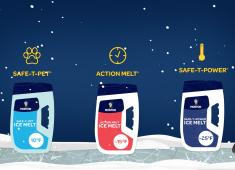
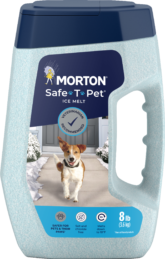
Choosing the right melter can help save time and money while reducing environmental impact. When temperatures drop below 5°F, melters that contain calcium chloride are best. These melters will clear thick ice and snow quickly in extreme temperatures to help prevent painful slip and fall accidents. In “normal” winter conditions, 5°F and above, choose a melter that contains an ingredient like urea or potassium. These ingredients melt effectively in these temperatures but are safer for people, plants and pets. For the safest melting around pets, choose a melter that is free of chlorides. See “Maximize Your Melting” for more information.
• Use Wisely
Newly laid and any poor quality concrete, regardless of age, are more susceptible to damage caused freeze-thaw cycles in the winter. You should only use ice melters on properly formulated, cured, air-entrained concrete that is at least one year old.
Apply ice melters (a.k.a deicers) before snow and ice accumulate. This will help prevent ice and snow from bonding with the pavement making it easier to remove in the long run.
• Choose Wisely
Choosing the right melter can help save time and money while reducing environmental impact. When temperatures drop below 5°F, melters that contain calcium chloride are best. These melters will clear thick ice and snow quickly in extreme temperatures to help prevent painful slip and fall accidents. In “normal” winter conditions, 5°F and above, choose a melter that contains an ingredient like urea or potassium. These ingredients melt effectively in these temperatures but are safer for people, plants and pets. For the safest melting around pets, choose a melter that is free of chlorides. See “Maximize Your Melting” for more information.
• Use Wisely
Newly laid and any poor quality concrete, regardless of age, are more susceptible to damage caused freeze-thaw cycles in the winter. You should only use ice melters on properly formulated, cured, air-entrained concrete that is at least one year old.
95
0